A New Era for Student Life
For decades, students and teachers have navigated the same hallways, classrooms, and common spaces that, while full of memories, were never designed for the demands of today’s learning. The New School Project represents more than construction; it is a reimagining of what school can and should be. According to high school principal Dr. Brossman, the project was driven by necessity, vision, and a long-term commitment to student success.
The Vision Behind the Project
From the beginning, the New School Project was guided by both visible and invisible challenges. As Dr. Brossman explained, “the best thing guiding the project are the mechanical issues… we have plumbing issues and things behind the walls that we can’t see behind the walls and it can cost a lot of money for replacements.” Beyond infrastructure, the building itself had not seen significant updates since the 1990s, meaning students were learning in spaces designed over 30 years ago. The district explored four major options: renovating the current building entirely, doing a smaller renovation on the Franklin side, removing Franklin and renovating athletic spaces, or rebuilding from the ground up. Ultimately, the third option was chosen because it balanced cost, functionality, and longevity. “The third option was best because it was the best value in terms of the cost and how long the life span of the final product,” Dr. Brossman said, noting the new building is projected to last 75 years.
Addressing Student Needs
One of the most pressing issues the current building struggles with is space. “Classroom size is the first,” Dr. Brossman emphasized. Smaller classrooms limit movement, collaboration, and modern teaching strategies. Additionally, the existing structure is “very long and linear,” making movement inefficient and crowded. The new design prioritizes flow and accessibility. “In the new building all the hallways take you somewhere to improve circulation flow,” he explained. This change alone is expected to reduce congestion and improve the overall daily experience for students.
A Better Day-to-Day Experience
Academically, students can expect larger, more appropriately sized classrooms and upgraded lab spaces. Socially, the design creates intentional places for connection. “There will be spaces in the hallway called collaboration spaces. Instead of students on the floor,” Dr. Brossman said. A new commons area will replace the current one, and the library will move to a central location, becoming “kind of in the middle of everything.” The goal is to make the building feel open, welcoming, and cohesive. “While the building itself is gonna be bigger, I think it’s gonna feel more cohesive, kind of bring us all together.”
Listening to the Community
Student and teacher voices played a major role in shaping the project. Teachers and departments worked directly with architects, while students contributed through Student Council input. The district also hosted two community forums to answer questions and gather feedback. This collaborative approach ensured that “everyone is getting something in the project,” according to Dr. Brossman.
Features That Will Make the Biggest Impact
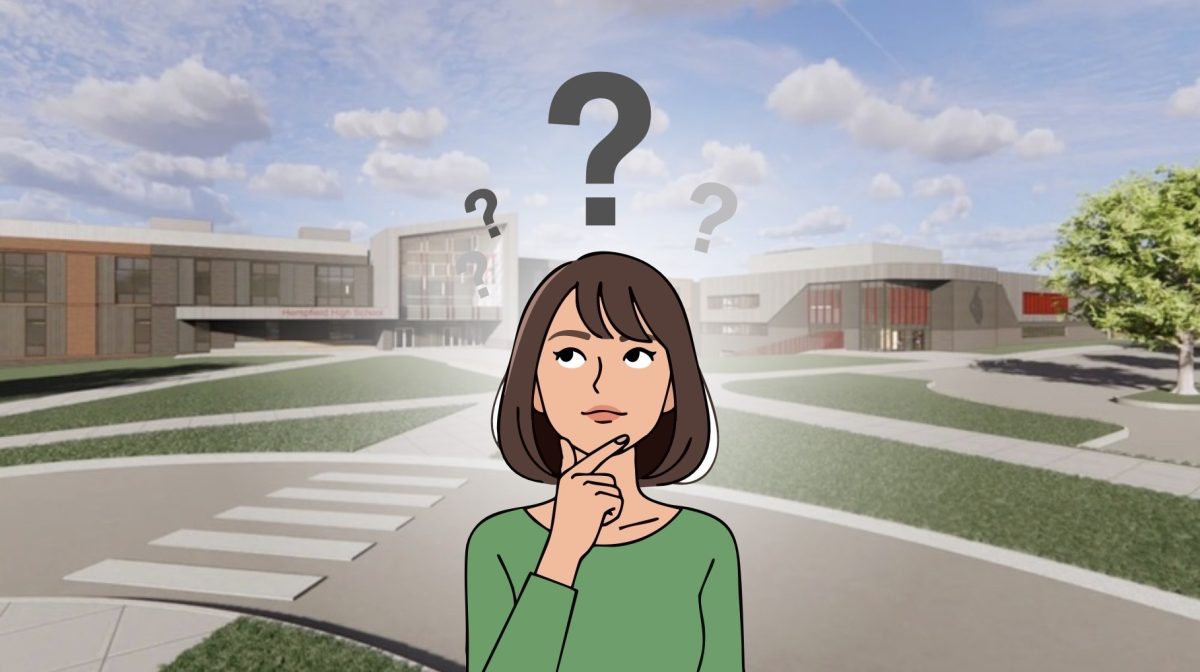
Among the most anticipated upgrades are the new cafeteria and enclosed cafeteria courtyard, which will feature astroturf instead of grass to improve safety. The gymnasium will be significantly larger and designed in an arena style, replacing the “tight” feel of the current gym. The project also prioritizes safety and organization. All parking will be moved to the front of the building, with a single main office to eliminate confusion. “Student parking being in the front… will improve safety and traffic flow,” Dr. Brossman said.
Overcoming Challenges
Financial planning was a major hurdle, but one the district prepared for. “The district has been setting money aside for several years,” Dr. Brossman explained, along with a slight tax increase that was addressed during community forums. Logistically, construction will require flexibility. Some classes will be relocated, and movement in and out of the building may be disrupted. “It’s a construction project, so things might change around (here),” he acknowledged.
Timeline and Transition
The full project is expected to be completed during the 2030–2031 school year. “Seniors that year will experience a complete finished product, which is our current seventh graders,” Dr. Brossman shared. However, the project will occur in phases, meaning current freshmen will still experience parts of the new building before they graduate.
A Lasting Impact on Culture and Success
Dr. Brossman believes the new building will strengthen school pride and culture. “Hempfield is a special place and has been admired… it will add to our status and will increase people wanting to come with our new building and our curriculum.” Still, he emphasized that “the building does not make Hempfield, the people do. The building will just add to that.”
Supporting Athletics and the Arts
Extracurriculars will see major improvements. Athletic spaces will be intentionally designed, with spectators on upper levels and athletes on the lower levels. A new training room and connected weight room will better support student athletes. The performing arts will gain an entire wing connected to the PAC, with instrument storage placed next to performance areas. The Hackman Auditorium will be removed and replaced with a new black box theater, offering more flexibility for performances.
Looking Ahead
Reflecting on the project, Dr. Brossman said he is most proud of the collaboration behind it and excited for students to enjoy the everyday improvements. From cafeteria bathrooms located inside the cafeteria to improved labs and clearer hallways, the small details matter. “I’m super excited for it,” he said. “It is a ton of work and we have to be flexible and things will be messy… But we’ll figure this out together.” As construction begins and plans turn into reality, the New School Project stands as a long-term investment in students. Not just in how they learn, but in how they feel walking through the doors each day.