(NOTE: Other interviews for Hempfield’s production of Les Mis can be found here:
Wilder Long and David Becker: https://hempfieldflash.com/3226/features/hempfield-les-mis-interviews-david-becker-and-wilder-long/
Jonny O’Maille and Derek Harris: https://hempfieldflash.com/3237/features/hempfields-les-mis-lead-interviews-jonny-o-maille-and-derek-harris/
Sonia Shih, Izzy Conicella, and Liam Conicella: https://hempfieldflash.com/3262/features/hempfields-les-mis-cast-interviews-sonia-shih-izzy-conicella-and-liam-conicella/
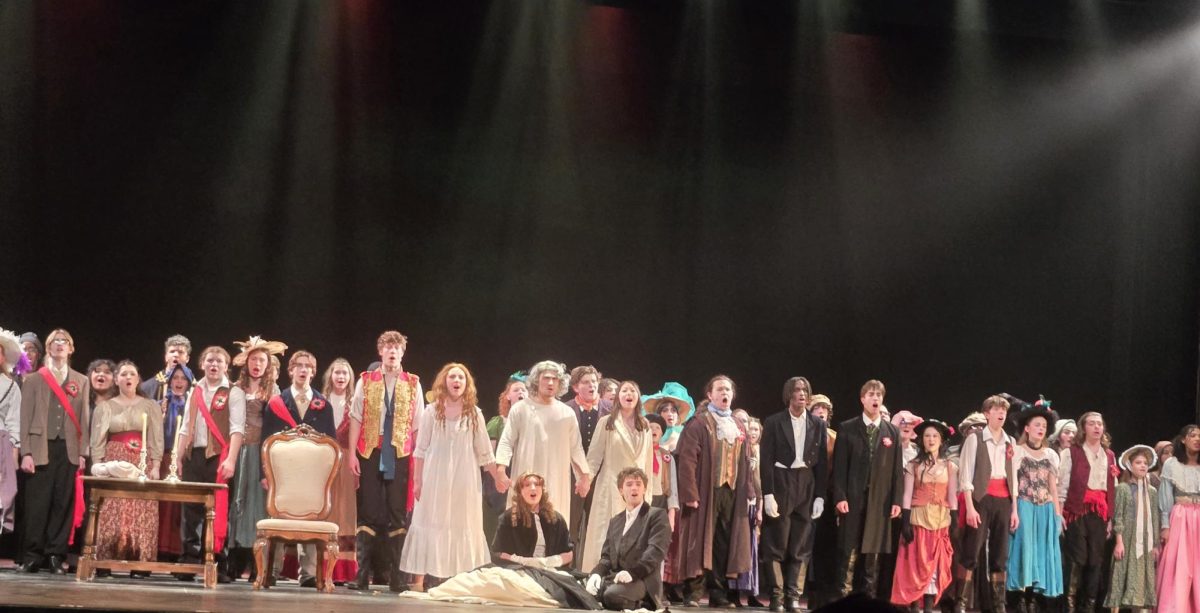
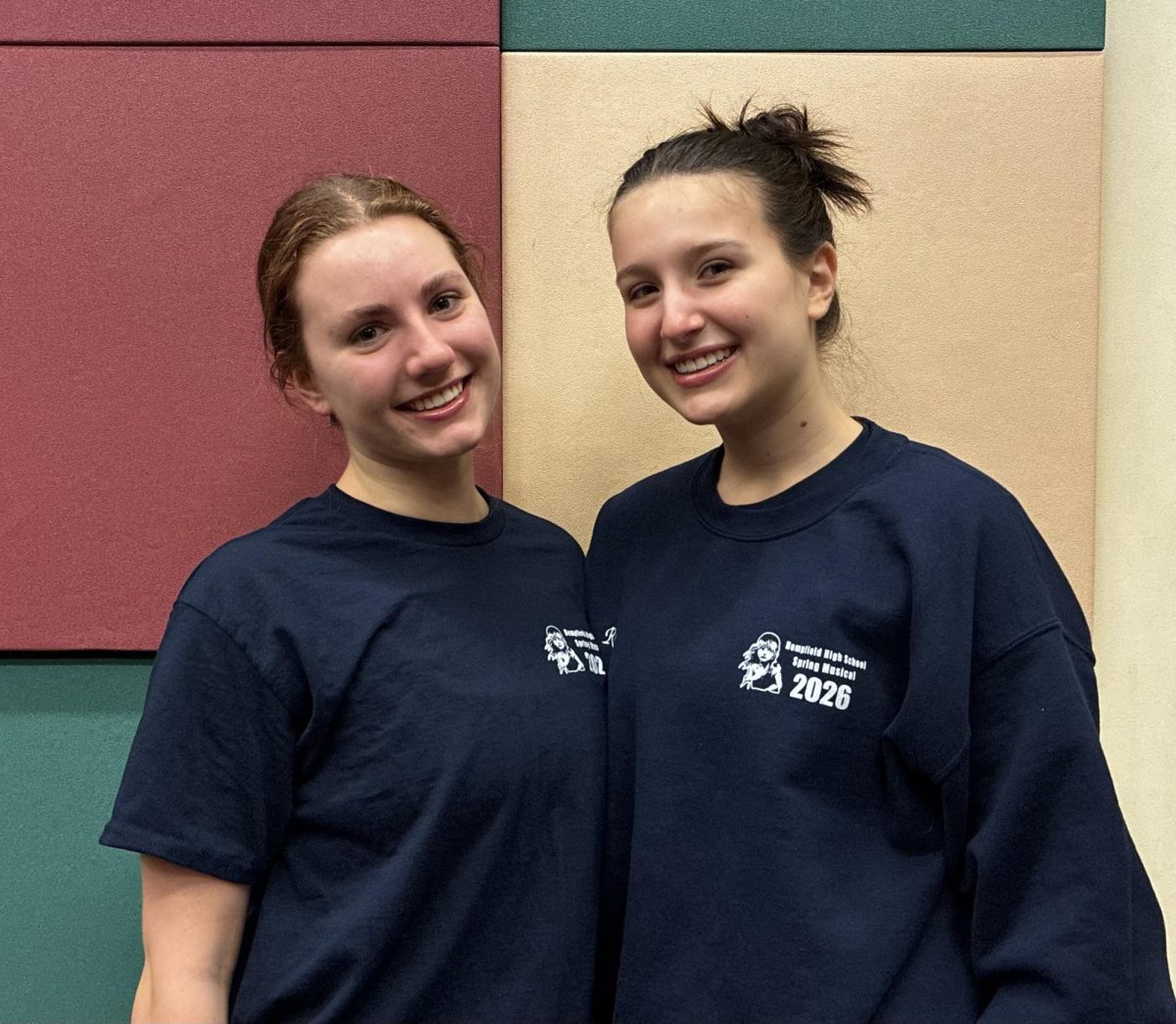
This is the third in a series of interviews that I’ve conducted with the leads for this year’s musical, Les Misérables. This interview features the juniors Addie Aument and Reese Szulborski, who take up the roles of Fantine and Cosette respectively.
C: All right , so let’s just start off. Could you say your name and role for me real quick?
R: Okay, I’m Reese Szulborski, and I play Cosette,
A: And I’m Adelynn Aument. I play Fantine.
C: Do either of you have any previous experience in the theater, Hempfield or otherwise?
A: We both do. We’ve both been in all three years of our high school careers, like musicals, and then I’ve done stuff outside of the shows.
R: Yes, I have done it since my freshman year. And then in middle school, I did both of the musicals. I haven’t done much outside of the musical in Hempfield High School, so I’m a beginner.
C: So, Addie, you said that you’ve been in productions outside of Hempfield?
A: Yeah.
C: What are those like?
A: They’re a lot different, rehearsal process-wise, because where I’ve done them, it’s a lot shorter. We have, like, a whole month here of perfecting the music. That way it doesn’t leave our brains and our bodies when we get the blocking, the choreography, and that even takes two months, and then we spend a whole weekend here doing tech and multiple days of dress rehearsals. When I’ve done them at Dutch Apple and even EPAC, sometimes you have a week to get off book, two weeks worth of blocking, the third week, sometimes even the second week, it’s just tech re-block one dress rehearsal, and then you come in early before your opening night, and you do a hat run, which is basically where you just use your props and any big pieces that are big issue to make sure everything runs smoothly, and then you open.
C: So it’s just a lot snappier.
A: Yes.
C: Which do you prefer?
A: I like it that way more. I like having to think more on my feet, and it also keeps me from getting too comfortable with a role, and I don’t make the same choices over and over again. It doesn’t—it becomes less personal when you do it for three months.
C: Before Les Mis was announced as the musical that we’re doing this year, did either of you have any personal, meaningful experiences with it, or was it a completely new show to you?
R: For me, it was a completely new show. I’ve heard of Les Mis before, but I’ve never seen the movie, I’ve never seen a stage performance of it. I heard Fantine’s song on TikTok. That’s how I knew it. But other than that, no, and it made me really excited to be exposed to a new show, especially such a classic one because everybody has heard of Les Mis and most people have seen it. So that was exciting, but also nerve-racking.
A: I knew the show. It’s actually one of my favorite musicals, and I’ve been cast in it before, but I wasn’t able to do that show. So I have experience with the music itself, but I’ve never gotten the chance to see it in theaters. I’ve watched the movie, but I’ve never been able to do it on stage, it’s really exciting to do.
C: What were your first thoughts when Les Mis was announced?
A: So me, Reese, Ayla, we all were kind of like, “oh, it’s definitely Les Mis,” like, kind of joking, but also, what else was it gonna be? And then they announced it, and it was Les Mis, and I was really excited. I mean, if you know Les Mis, and you know how musical theater is, and the hierarchies of shows, hearing that you get to do Les Mis is a really big deal. I think I was just excited to do something very new and very different. I haven’t been able to play a role like this, or even if I were in the ensemble or any other role, it’s so different from anything I’ve ever done before, and I think that’s really exciting. And it was so invigorating to dive into something new and exciting!
C: What did the audition process look like for this show?
R: This year, for me, it was especially different because the stakes were pretty high for the ensemble and leads. This year, it was—there was no dance call, so it was just music-focused, and we didn’t have to read any lines because Les Mis doesn’t have any speaking parts. So I really just had to hone in on music and how to emote with my body and my face and enunciate things. That was what I focused on during my audition process, and I still focus on that now that I’m in the show.
A: I mean, we found out what the show was in May for a reason, it is a hard show, and it gave people months on end to vocally prepare and get their stamina up. And I think that’s what I focused on, because I have okay vocal stamina, but that’s mainly for when my body’s moving, but if I’m singing so much, and it’s–it’s a hard show. And, like, I don’t want to speak for Reese, but her character is insane. The range is insane. She’s hitting a C6 at the end of the show, which is a very, very high note. And I know, like, originally, you didn’t really sing stuff like that and it sounds so good. The other difference this year is that there were two days of callbacks. Not everyone was called. But instead of doing a review day on Monday, where everyone who’s auditioning can come to the Hackman for like an hour, maybe, and we all just think through it, make sure we’re all good with it, and then we do the auditions on Tuesday, callbacks come out, we have a day to learn it. And then Thursday, new callbacks, Friday is the cast list. This year there was no review day, and there were two days of callbacks. So it was just different, but it was a good different.
C: Did you expect to be cast in the role you were cast in? And what went through your mind when the cast list came out?
R: Me? No, I was not expecting that. On day two, I got called back for Cosette, and I was the only girl who got called back. So I was like, “oh my gosh, this is even scarier. I don’t know her character, I don’t know her music,” so that was a big scare for me. I was not expecting to get called for Cosette, or even be in their head about Cosette, so I was really shocked about that. If anything, I was expecting Fantine because I feel like I give off more motherly vibes, I guess, because last year I was Fastrada. But you never know what the directors want.
R: Yeah, you never know what they’re thinking, especially because you’re so focused on yourself and what you’re doing, you have no idea what is going on in other people’s brains. I honestly had no idea who I was going to be, because I’ve had experience being Madame Thénardier and I was afraid of being sort of typecasted. I love Éponine. It’s such a good role. But then, once we got to the callbacks and we were singing, and I did Fantine, I was like, “I really like this role.” And then I found out after the cast list came out that it made sense for me to do it, because I have such a wide range. Like, I can be an alto, and she hits a note that’s like an A three, it’s a very low note. But yeah, I didn’t honestly—fun fact, I didn’t actually get to see the cast list before I knew what I was, because people were walking back, and people like to be like, “you got this, you got this,” and so I found out before I even got to see the cast list, which is a little bit of a bummer, because it’s so fun to experience that with everyone that’s around you. But also it was kind of nice to mentally prepare myself to walk into it and see it, because it’s a very emotionally intense scene to see people see a cast list.
C: All right, now I have, I have questions for each of you now individually. So these first ones are for Reese. It’s commonly thought that Cosette is a pretty flat character overall, especially when you look at every other character in the show. However, she is also probably the most recognizable symbol of the show. First question, do you think that Cosette is a flat character?
R: I can see how people think that, but personally, no, I don’t think she’s a flat character. I think her name is mentioned so many times in the show. She’s the reason why Fantine died, practically because she had to live on the streets, she gave all her money away to the Thénardiers. And then Jean Valjean adopted her, and his whole life kind of revolved around Cosette, and Fantanes too. I don’t think she’s a flat character.
C: And is that why you think that she’s sort of become the symbol for Les Mis because she is such a central character to the show?
R: Oh, 100%. She’s the cover of the Broadway, right? The Dirty Girl, that’s what they call her.
A: Also Cosette’s such a symbol of hope, and I think that’s the whole moral of the story. This whole show is about hope.
R: Yeah, and she brings light to this show.
A: It’s so dark and the character’s not.
C: Speaking of the show being dark, Addie. Fantine’s story is far and away one of the most tragic aspects of the show. What do you have to do to prepare yourself and get ready for playing a character that has so much weight behind it?
A: It is so heavy, especially because it all happens in 30 minutes, for my character at least. But, honestly, it kind of made me realize what I needed to do. I had a really bad day, I don’t remember what happened, and I just listened to sad music the whole way to rehearsal, and that was the best rehearsal I’ve had emotionally. I felt very invested in my character. So I think part of it is like, I really just have to ground myself and get ready to do the show, but also, I have to remember to remind myself that Fantine isn’t doing this because she’s weak or because she’s sad or because she’s dying. She’s doing it for her daughter. She’s doing everything because Cosette is the light of her life. I think that is such a big aspect in the role itself is making sure that when that hope dies, it has to come back. The hope doesn’t die when Fantine dies. It just—it can’t. And I have to make sure that I’m keeping Fantine a strong woman who at times dips her toes into that darkness of giving up, but I have to make sure that I don’t let that happen and I don’t make the audience think that I’m giving up or something like that. You know what I mean?
C: Oh yeah. Now, going back to the more general questions, how long has rehearsal been going on, and what does it look like? How rigorous is it?
A: Oh, okay. So normally the cast list comes out and then the next week we start right away, and we normally watch the movie. Normally we do a table read, but we didn’t this year because there’s no speaking. So we just watched the movie and then we immediately jumped in. It’s almost alternating every other day, it’s leads, then ensembles, then leads, then ensembles. And the songs are so blended, if it isn’t like a solo, the ensemble’s in every song, so everyone was at almost every rehearsal. And then we had a vocal recital this year, so we had to be off book a lot earlier than we normally do. It’s normally like, two weeks ago, we would have to have been off book, and this year, it was like December. So, it’s vocally very rigorous.
R: January.
A: Yeah, January, that’s right. But this year, it isn’t physically rigorous. I mean, again, for me it’s not, I can’t speak for people who are in every number. But it’s not as physically rigorous as last year was, because it’s not a dance show. But vocally, I feel like it takes a lot out of you.
C: So what’s the community like in the Hempfield Theater Department?
R: Oh my gosh, the community, it’s the reason why I come to school. It’s what motivates me to get through my day, just knowing I have rehearsal at the end of the day. I’ve made some of my best friends through musical. People come to musical— people have told me this—they’ve come to do musical to find community because, maybe they’re having a hard time with friends and stuff and they want to be guaranteed a tight-knit group of people. And I think that it’s such a good place to come. We’re all a big family, and I just love it so much.
A: You said it perfectly. It’s literally just a big family. We all love each other so much.
C: Are there any stresses, worries, or anxieties that come with musical season?
R: Of course. Right now, I’m really dealing with it because I’m doing DT as well, and tech’s coming up for that, it’s just a lot. Balancing school, Dance Theater and musical is very, very challenging. So I’d say that’s, for me that’s what the hardest part about it is.
A: I agree. We’re in the same boat. We both have musical and Dance Theater, and we’re in every number in Dance Theater so far, so we’re there every day for three hours, right after musical. So it’s hard nourishing our bodies, finding time to eat.
R: We only get a half hour between musical and dance theater. Also, we’ve been here since 6:30 this morning for Chamber Choir, and we’ll be here until 9:30 tonight for Dance Theater.
A: I mean, I got to leave because I have open campus, but also it’s not like a free period. I have to get work done during that period and I didn’t today because I had to go to the doctor. And I didn’t get to eat lunch today! I haven’t eaten today. So that’s that. I think the stress is just making sure that we’re getting enough sleep and not getting sick. I think that’s my biggest concern. My biggest concern is like, am I going to get sick. Especially in Les Mis, like, you don’t want to get sick and sound awful.
C: We’re nearing the end of the interview here. What’s your favorite song in the musical, to sing and to listen to?
R: My favorite is “A Heart Full of Love.” I love the way it sounds. I think it’s so fun, I have so much fun with Derek. We’ve gotten really close and become really good friends. I’m just very comfortable with him, and doing that scene together, it’s just fun, in my opinion.
A: My favorite song to sing is “I Dreamed a Dream.” Fantine literally doesn’t sing anything else.
R: I love listening to Derek singing “Empty Chairs at Empty Tables.” He does a wonderful job.
A: Him and Sonia, their solos are perfect.
A: “On My Own” is good, I love “Rue Plumet” (“In My Life”). That’s one of my favorite songs to listen to. And especially when it goes into “A Heartful of Love” because your high note is beautiful.
R: I would just like to thank theater for changing my life in the best way possible. If anybody has a little figment of hope that they want to pursue, if anybody’s thinking about doing a musical, just do it. It’s one of the best things you’ll ever do, and I’m really going to miss this when I graduate. So I’m just going to thank all my castmates, the crew, the pit, the directors. It’s just a dream, is all I can say.
A: I agree. I definitely will miss this more than anything in the last 17 years of my life. Just go for it, don’t stress yourself out. Do what makes you happy. I think theater is such a good experience for people, even if it’s like, “I was the lead, I was Tree Number One,” one, you get a family out of it, but also, it’s such a good experience, no matter what you are in the show. If you’re in the crew, if you’re in the pit, you are learning so many good things as a human.
R: And you will remember that part of your life forever.
A: It is stuck in your brain. I just want to thank everyone who’s been a part of this journey, especially my best friends who have been there when it’s like the darkest day on earth when I walk in the door. And the directors for being so encouraging and so open-minded and always—they’re always there to talk, and I think that is a really good thing that we have here. They’re not mean ever. They’re some of the nicest people. Just everyone, I have so much space in my heart for them and I love them all very dearly.
C: All right, if there’s nothing more, that’s going to conclude this interview. I’d like to thank you both for your time.
A: Of course, thank you!
R: Thank you for inviting us!