(NOTE: Other interviews with cast members of Hempfield’s Les Mis can be found here:
David Becker and Wilder Long: https://hempfieldflash.com/3226/features/hempfield-les-mis-interviews-david-becker-and-wilder-long/
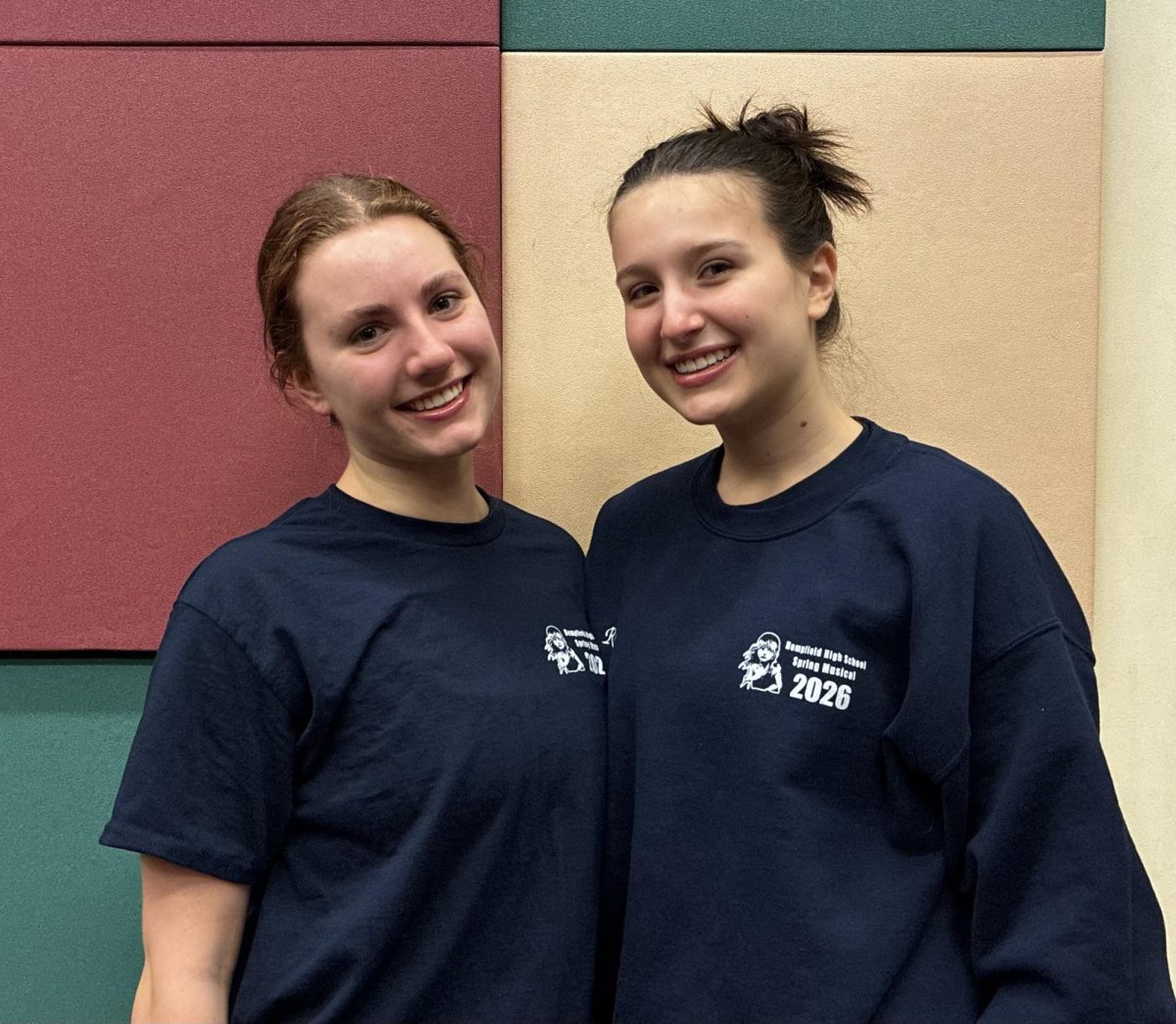
Addie Aument and Reese Szulborski: https://hempfieldflash.com/3254/features/hempfields-les-mis-lead-interviews-addie-aument-and-reese-szulborski/
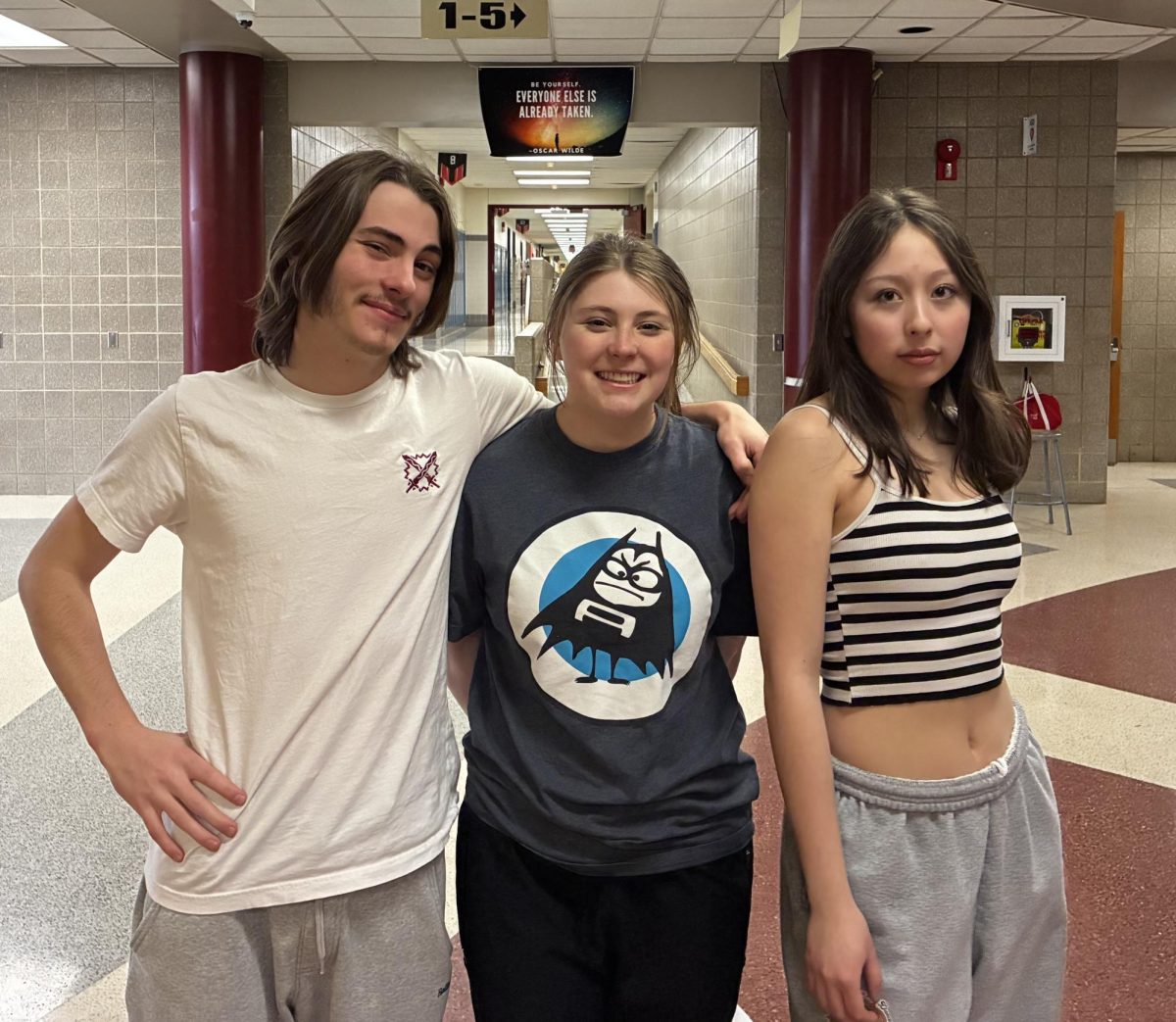
Sonia Shih, Izzy Conicella, and Liam Conicella: https://hempfieldflash.com/3262/features/hempfields-les-mis-cast-interviews-sonia-shih-izzy-conicella-and-liam-conicella/
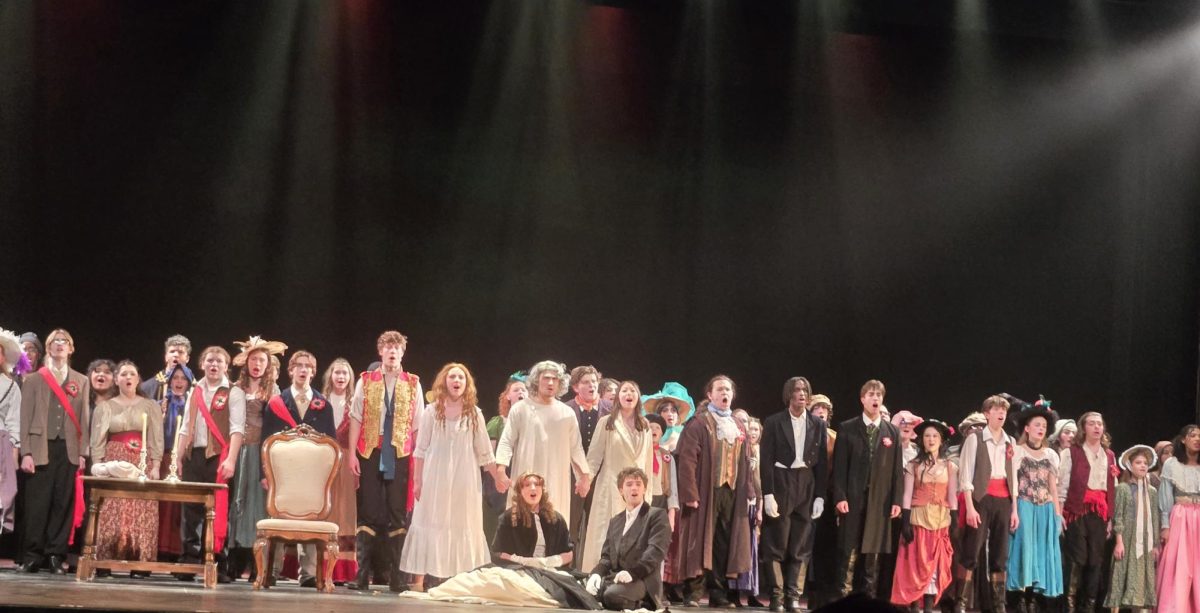
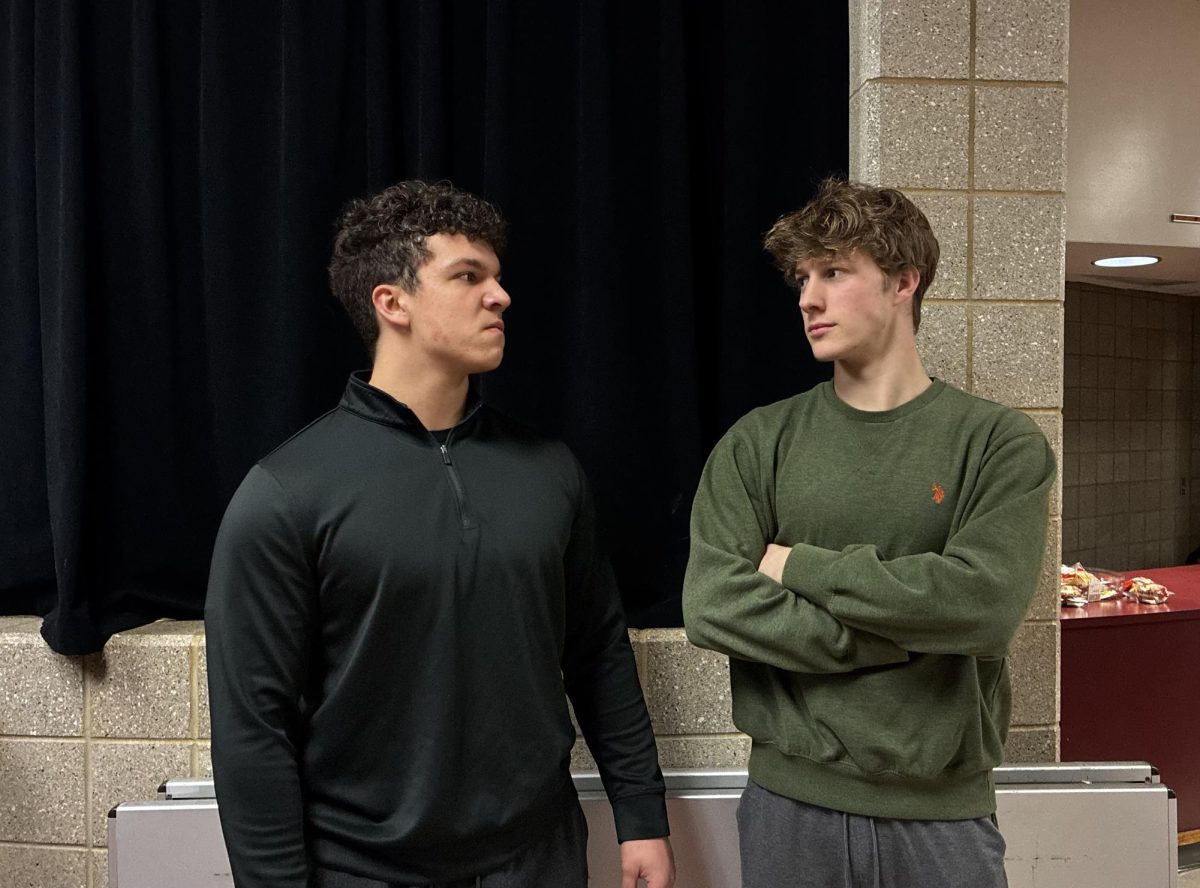
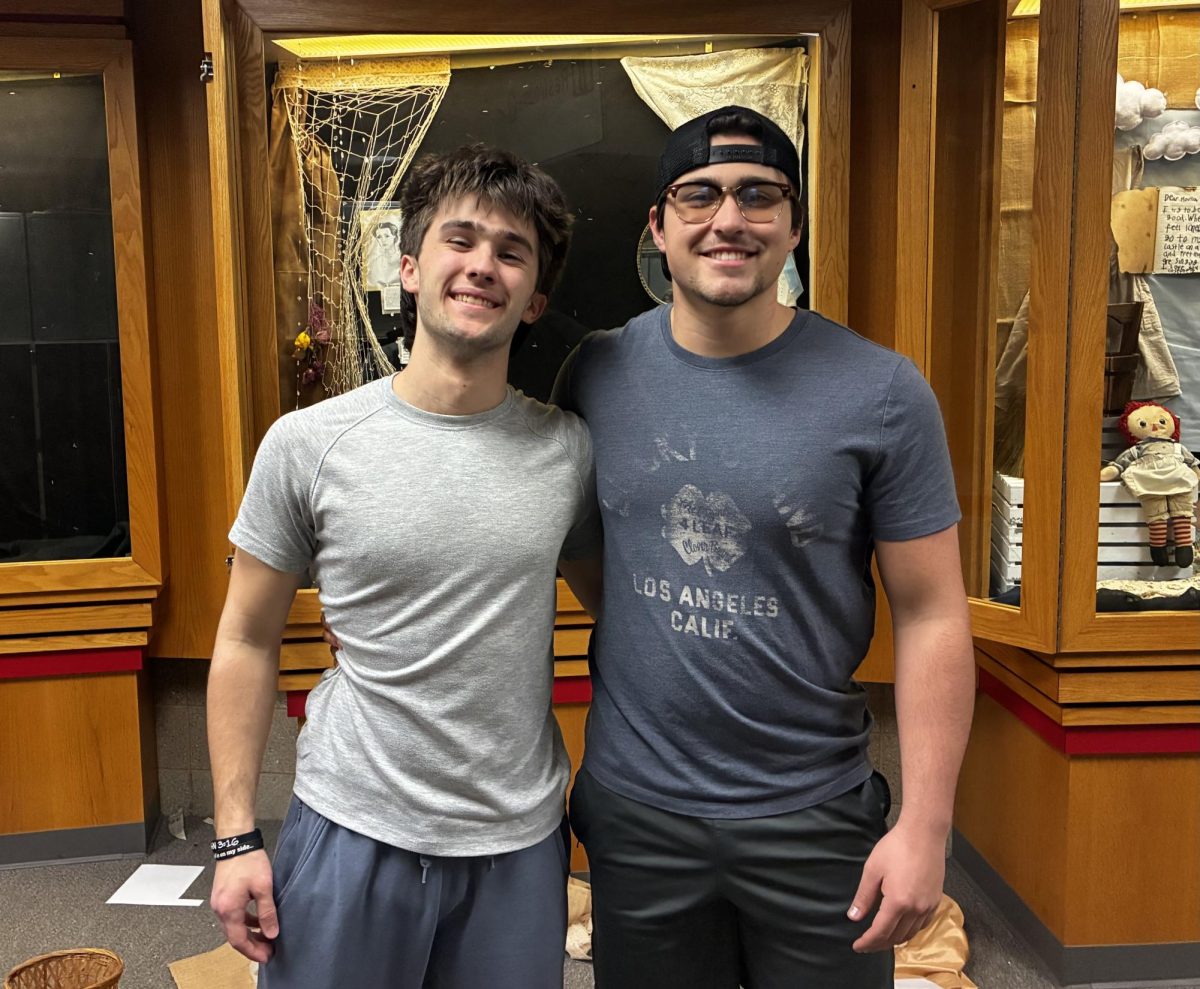
Up next in my series of interviews, Jonny O’Maille, who plays Jean Valjean, and Derek Harris, who plays Marius Pontmercy. Here’s that interview.
C: Alright. So first I’m just gonna ask you for your name and your role in the show.
J: My name is Jonathan O’Maille, I am Jean Valjean.
D: My name is Derek Harris, and I’m Marius Pontmercy.
C: Do you guys have any previous experience in theater at Hempfield or elsewhere?
J: Yeah, I have a little less than this guy does, but I’ve done Fiddler on the Roof my sophomore year, Pippin my junior year, and this year, Les Misérables. I also did one community theater show, Bright Star at Susquehanna Stage.
D: Last year, my freshman year, I was Pippin in Pippin. Way back in 2020, I was Chip in Beauty and the Beast, and I have a little over 30 shows of experience under my belt.
C: Both of you said you’ve been in productions outside of Hempfield. How does a Hempfield production differ from productions at other places?
J: In my experience, this is better and bigger, I’d say. We sit more people, it’s a bigger house, and just the environment. To be raised off the ground and not to be eye level with people just kind of gives us the real opportunity to get in character and not really worry about, you know, people being right in our faces. But, um, the atmosphere is completely different being that we have a bigger team of people working towards this production being as amazing as possible. And Hempfield’s always had a great reputation putting on a good show.
D: I agree completely. I’ve done shows all over the place, and it’s surprising. Some places like, I worked at the Dutch Apple, and frankly, I feel like a show at the high school was a lot more work than doing it at a technical, professional level. It’s just, there’s so many people that are so willing to put so much time into it, just to gain experience through it because we’re high schoolers. And it’s really cool to see all of us just collaborate in such a unique way.
J: It’s very in-depth too. Like, the show that I did outside of Hempfield wasn’t anything that had to do with learning how to sing certain ways or how to, you know, just… Um, just overall, um, what was I saying? What was I talking about?
D: Learning experience.
J: Yeah, um, they actually teach us here, because they understand that we’re mostly new to this. So, a lot of it is in depth in trying to make us the best characters that we can possibly be, carrying our experience outwards and forwards if we desire to, you know, continue acting and performing.
C: Now, going back to before there was even an idea to do Les Mis at Hempfield. Did either of you interact with Les Mis in any particular meaningful way when you were younger?
D: I honestly had not listened to this show until it got announced at Hempfield. I’ve always known that it was like a really, really popular and well-respected show, and I was like, “I’ll get to it at some point,” and it came a lot sooner than I thought it would.
J: Yeah, and it was something that I talked about with the Merchandiser and the people over there and I was like, “this is one of the titans of musical theater,” and to be able to perform this year, it was something. It was an idea that everybody wanted to do since, like, I was a freshman, you know. It was like, “oh my gosh, this would be such a cool show to do,” and it was always in everybody’s head, that it could be in that raffle of something that we could put on at Hemfield. But we didn’t have the right kids until this year. A big part of it was that we needed Derek to get to the high school. We don’t have many crazy, tenorish guys that really can sustain a higher voice, and now we really do. We really filled out those roles and, you know, just… Yeah, we have a lot of people who can go all up and down that spectrum with people who can sing really low, like Javert, and the Bishop. All of it’s just really, like, we’ve got the right people for it.
D: And I think a lot of that is really well planned out by the directors. I think that they were kind of trying to strategically plan ahead, just seeing that we had so many great juniors to fit all the parts, whether it’s like the leads or the supporting, even the ensemble is so important in the show, because without it, so much is missing.
J: And even in my sophomore year, we had all these kids who had gotten leads, who weren’t necessarily familiar with being the center of attention. We had a lot of people who had worked in the background their first few years of high school when they got to their senior year, when they had gotten that opportunity. And then we ended up having a lot of younger people come in and just being naturally good at things. We had Addie Aument come in, who was amazing as Hodel and just could really perform and sing, she has a lot of background in musical theatre, too. Wilder who probably was the best Tevye that I’ve ever seen, like, he just knew how to fill a stage. Our three big guys who had years ahead of them our sophomore year were me, David Becker who is Enjolras this year, and Wilder who is playing Javert. And, you know, we just had time to kind of fill out and get comfortable on the stage, so we got really lucky there.
D: Another thing that I think makes this show so special is that, more than any show that they’ve done previously, it gives kids in elementary school a chance to experience a high school performance without having to wait until their high school year. Because last year we had Theo who did a great job. In years past we had that, but this year is truly special because we get to have three different kids
J: We have May playing young Eponine, Bailey playing young Cosette, and Jack who plays Gavroche who is a huge part of the entire barricade sequence.
D: It’s not like they’re throwaway characters, they contribute so much to the story, and I think that that’s a really great experience that we’re giving to younger kids.
C: What were your first opinions when it was announced that Les Mis would be the show we’re doing this year?
J: When it was first announced, me and Derek knew exactly who we wanted to be, and we ended up getting those roles, you know? It was kind of, I will say this, Wilder is my best friend, so ever since I got to see him perform a lead role, like the lead role of a show, I was always kind of inspired to to learn how in-depth and how important it can be to to be the center of attention, you know, and it wasn’t like I was striving to be the center of attention, but it was understanding the workload that that went into him becoming such a good Tevye when he was a sophomore. And that was something that always really inspired me to do my best and to get to this point. And we have a very colorful ensemble, we’ve just got a bunch of performers that can really put on a show.
C: What did the audition process look like this year?
D: The auditions this year were a little bit different than last year in the sense that last year there was a special skills column and they had one excerpt for everyone. It was a little different this year in that there was one audition piece that everyone collectively learned, and then a separate audition piece for the tenors and basses and a separate one for the sopranos and altos. And I think that was a really clever idea to kind of divvy up vocal parts, especially since this is an operetta, which is a little bit different in the sense that everything is sung through with very little time for lines or speaking or silence. It’s just one song after another after another, and I think that the importance that they put in the audition for vocal strength and vocal training and vocal endurance, it was a really great call on their part.
J: The callbacks, a lot of what I ended up doing at least was singing things through twice. That’s what they wanted to see, if you could hit those same notes twice. I believe you and I got called back for almost, if not every role. We got called back for all the same stuff, besides Thénardier. But callbacks and auditions were actually really simple, you know, you go in there and you sing probably 16 measures of music. The funny thing is, I didn’t even originally get called back for Jean Valjean. They ended up sending me the music the night after the audition, which, obviously I was bummed out for a few hours, but when I got the callback music, I really just spent the next day—I already knew all the stuff for the part that I wanted for the part that I wanted because I knew that that’s where my head was and that’s what I needed. But when you get to callbacks, you know that you’re in an environment with a bunch of talented actors that just want to do their best and put on their best performance, so callbacks are always fun, but they’re also really hard, and sometimes you can tell when a person will be that character, and sometimes it’s a little bit of a toss up, you know? I’d say I feel like every year there was one person where you knew they were going to be that character. My sophomore year it was Wilder, being Tevye. My junior year, it was Ayla Vieland being Catherine. And this year it was Liam Conicella being Thénardier. He did it the best, he knew what he was doing, and he was the most colorful depiction of the character.
D: I think the coolest part about that is, a lot of times, for me personally at least, you can see it in their eyes who really trained for it. Not to praise Jonny too much, but I had been with him working on it since it got announced, and we were we were working on a material a lot, and when you walk up on a stage, you could see it in Liam, you could see it in Jonny, you could see it in Wilder. All of them had that look in their eyes that they had been ready for this. And it was really cool to see all of them just lock in like that. It was a great experience. And even like having years of experience of shows behind my back, it still helped me learn new things about presenting yourself in a certain way for a different role, and I think that’s always a really cool thing to see at callbacks.
J: Yeah, it’s just who was the most flexible, you know? It’s like we had our first ideas of what we wanted our characters to be, but I feel like every single one of us have really built on that. I’ve seen Wilder build himself up to be the Javert that he is today, I’ve seen Derek build himself up to be the Marius he is today. You know, like a lot of it goes into character building and, all of us dug deep and tried to find something that really connected us to each and every one of our characters.
C: I know you guys both said you wanted to be cast in the roles that you were picked for, but did you expect to be cast as Marius and Jean Valjean respectively?
D: No, I had no clue. I had a feeling that he [Jonny] was going to get Jean Valjean just because I’d seen how hard he worked. I thought I would get a couple parts just because I’m a guy doing theater, but it was a big competition this year because there were a lot of guys that put in the work, put in the drive, like, Luke Knepper and Josh Becker come to mind a lot. They put in so much work and they’re such talented performers. And it was a real competition this year. It was a great experience.
J: I had my suspicions with the character. I think after last year, they forgot to put my name on the callback list for Jean Valjean this year, but last year they actually just forgot to put my name on the cast list. And then I talked to Ramos the next Monday and he goes, “what do you mean you’re not in the show, you’re in the show.” And it’s like, “oh, yeah, okay, I’m actually in Pippin.” That, as an ensemble member, that shook me. After that I was worried because at that time, I wasn’t sure how I felt about theater. But, you know, after doing kind of my own deep diving on how I feel about theater and what it means to me, and all of the studying and the training that went into my voice, I really had a feeling that this was something that I could do if I really put my mind to it. So the moment that I found out what the show was, it was go time to become this. You know, I was not anywhere near being who I am vocally or as an actor today, but I really wanted it, and I went and I got it.
C: I have two questions now, one for each of you. First for Jonny, obviously the role of Jean Valjean is one of the biggest legacy roles of all time in the West End, in Broadway, in the entirety of musical theater. What does the role of Jean Valjean mean to you?
J: What it means to me has nothing to do with Broadway or West End or any of it, or the legacy of the role. I’ve been lucky enough to have a few men in my life who have not had it easy, you know, and have really had to fight to become the generous and caring and amazing people that they are. And I’ve seen their worst moments, and I’ve seen their best moments. And I give it all to them, everything that I’ve learned, with all the substitution that I’ve put into this character of like, this is how I feel this person in my life relates to Jean Valjean. I give it to the people who taught me what it looked like to be angry, but to also be sensible, to be caring and kind, and to be strong-headed and confident in myself.
C: And for Derek. Marius, also, one of the most well known roles in all of Broadway, West End, musical theater history, and obviously, there have been some iconic performers, Michael Ball particularly comes to mind. Does the role of Marius speak to you in any particular way?
D: I think the role of Marius can speak to a lot of people. There are so many iconic performances, but one thing that’s the same throughout all of them is that Marius is a set character, but he has such complex emotions throughout the entire show. You see him at his highest moments, you see him falling in love with the woman that he loves, just so much, means the world to him, especially in “A Heart Full of Love” and “In My Life.” A lyric that comes to mind is, “she has burst like the music of angels, the light of the sun.” He is head over heels. And then you see him at the lowest point of his life, when everyone he has ever cared for is just gone from him. And I think seeing that dynamic in this show, it really can speak to so many people because it shows as a character the humanity behind anyone that can even semi-relate to it. Everyone in their life is gonna have great days and terrible days, but the character shows persistence. And I think that’s a really important thing, especially for people our age. In high school, there’s so many great bits and there’s so many dark bits and everything just feels like it’s happening all at once, so I think that this role is a great example of persisting through everything to see the outcome. Because it might not be what you expect, but it’s certainly gonna be worth it.
C: How long has rehearsal been going on? What does it look like and how rigorous has it been for you two as leads?
J: It’s been semi-rigorous. There’s a lot of times where I have to pick up and drag Derek around out of the sewers, so we’ve been doing a lot of that, figuring that out. Rehearsals are from 3:15-6:00 so they’re about 2 hours and 45 minutes. I would say that we probably get 15 to 20 minutes total of break. Like, we’re not all always on stage, but me and Derek are always on stage I will say that. And, you know, it’s definitely been rigorous, but also it’s like, you’re not thinking about how rigorous it is. It’s just so enjoyable to just be on the stage. Like, you can go around and—you saw the set, like, it’s an amazing, immersive experience this show.
C: What’s the community like here at the Hemfield Theater Department?
D: Oh, it’s great. It’s a great community because it’s a culmination of so many different types of people united by one thing that they love doing. And I think anytime that that is applicable to a group of people, absolute magic happens. Because there’s so many people from so many different backgrounds, but unanimously, we all agree that this is something that is enjoyable and this is something that we want to do well. So the community is very united, it’s very kind, it’s very supportive, and it’s just a great group of people to be around.
J: Yeah, a little shout out, Elijah Hoover is one of our ensemble members. I’ve never seen a person care so much about a show. Like, even where there’s not a lot of significance to what he’s—not that there’s not significance to what he’s doing, but like, individually, you know, he’s an ensemble member. So he doesn’t have any of those really big solo moments. But I’ve watched him read the book, I’ve watched him study the music, I’ve watched him really, really care about his harmonies and making things sound good and making them sound right. And I’ve never seen it, you know, from anybody else who cares so much about the show, even from a smaller role. He doesn’t have any of those individual moments, but he really cares and he really tries.
C: Are there any stresses, worries, or anxieties that come with the musical season?
D: Musical season always has its difficult parts, because it’s off in the middle of the school year, everything’s kind of jumbled up, everything’s kind of stressful. And it can be stressful for the cast, the directors, the pit, the crew. It can be stressful for everyone involved, just when it feels like we have such little time left and there’s still so much to do, but something that’s really relieving is seeing it come together. Because in every show I’ve been in—Les Mis is my thirty-second show—every single time a show comes together, there has been a moment of, “oh my days, what is happening? We open in like a week. This is happening,” and then a couple days later, it’s, “oh my gosh, we have a show together, this is one of the greatest things ever, this is awesome.” And I think that going through those stressful moments is what makes the moment of “this came together” so great. Sunshine would not feel so good if rain didn’t exist. The great moment of “we have a show” would not be such a good moment if it wasn’t for, “oh my gosh, we have no show.” And I think that that is such a great question. That is a really great question.
J: I would say with this show particularly, a lot of it, we knew how hard this show would be on our voices. Every single one of us. So we’ve been putting in the work, you know, for the past 3 months, 3 to 4 months, really trying to get this show together. And it’s easy when you’re doing all of the music stuff and you’re at the end of a semester, but when your life completely changes with the block scheduling and you have these new classes with new teachers, and then you have to go to rehearsal, and then you have to go home and do homework you don’t understand, it’s all really, really scary, and it can get really scary. We’re in that time where it’s starting to feel a little scary. I think the people it’s probably hardest on right now is the pit because they have so little time to prepare in comparison to everyone else.
C: Alright. Now, a fun question after all that, what are your favorite songs from the musical? And that means favorite song to listen to and favorite song to sing.
D: I think my favorite song to perform is probably “Empty Chairs at Empty Tables.” I’m biased, but it’s a really fun song to vocally perform, because it’s at the bottom of my voice that, especially at the high school, no one knows I can use, because last year it was all a tenor and that was all everyone knew. It was like, “oh, he’s a tenor,” but by vocal clarity, I’m a baritone, and it’s so much fun to actually get to express that. Favorite to listen to, though… I love “Confrontation.” It’s such a sick song. “Confrontation” and “In My Life” are the top two.
J: I would say that my favorite song to listen to is “A Little Fall of Rain.” Everytime, everytime it tears me up. That’s the one song, like, I was in my car the other day, and I just, like, started bawling to this song, because, it’s just, it’s so real, you know? There’s a familiarity, especially as you get older to watching somebody die. And, you know, you get that with Addie’s character, Fantine, in the beginning of the show, but there’s not that connection there between Fantine and Jean Valjean. There’s a connection between Éponine and Marius. He’s watching one of his best friends lose their life. So every time I listen to that, it’s heavy. But my favorite song to vocally perform, it’s a toss up, but it’s either “Bring Him Home” or “Prologue.” I love “Prologue” because I can put so much emotion into that. It doesn’t have to always sound pretty. But with “Bring Him Home,” it’s very pretty. So I would say it’s a toss up between those two.
C: You guys have been great, this has been a really fun time. Do you have any closing remarks and thoughts, thanks for other people, and words to aspiring lead actors and actresses to give?
J: Thank you to my mother, for uh, giving me the gift of being selfless and trying my best to give unto others, and my dad, for the love of music, and then, my best friend, Wilder, for inspiring me to participate in musicals and really fall in love with them.
D: I want to give special thanks to my mom and dad as well, because they have supported me through doing so many shows. They have been my little corner that I can always run back to whenever I’m scared, I’m stressed, I’m worried, if I need to talk something out. They’ve always been there, and I will never be able to repay them for that. It’s just, I feel so appreciative. And I want to thank just so many of my friends that I’ve made, but especially Carly Geiter. I do shows with her in public theater, and she is my best friend. And we have gone through so many good shows, so many bad shows, so many boring shows together, and through all of that, she’s just been a really good sport to me too. I really appreciate it.
C: Well, that’s the end of the interview. Thank you guys for your time!
D: Thank you so much!
J: Thank you so much, it was really nice talking to you.